Transforming the future of stroke care: Philips supports stroke pathway redesign at Royal London Hospital
Oct 23, 2025 | 3 minute read
Stroke is one of the leading causes of death in the UK, striking every five minutes and affecting over 100,000 people each year. With 1.4 million stroke survivors across the country, the burden on healthcare services continues to grow. Stroke accounts for approximately 75% of deaths from cerebrovascular diseases, making it a critical public health challenge [1]. As life expectancy rises and the number of stroke cases increases, the need for faster, more coordinated, and more effective care has never been greater.
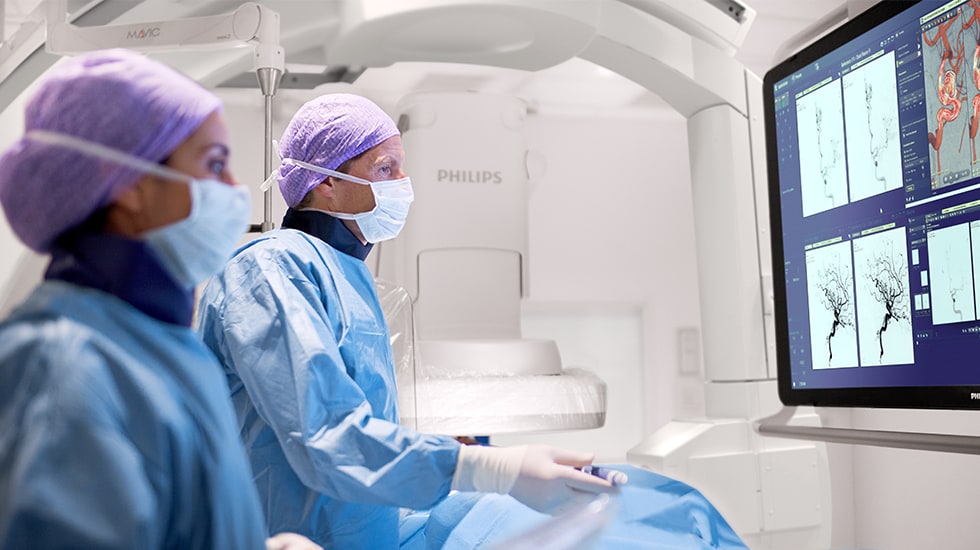
Philips, a global leader in healthcare technology, is supporting Royal London Hospital in its efforts to redesign the stroke care pathway, an initiative aimed at improving outcomes and reducing long-term disability for stroke patients in the UK. The project has involved close collaboration with clinical and operational teams at Royal London Hospital to better understand the practical challenges of stroke care delivery. Through immersive workshops and in-depth interviews with clinical staff, Philips has mapped the ischemic stroke pathway, identifying key workflow pain points and systemic barriers, and reflecting how national stroke statistics play out in everyday clinical settings.
Improving the stroke pathway is not only a clinical priority, but also a strategic step toward shaping the future of stroke care across the UK. By identifying challenges, the initiative is looking at potential opportunities to streamline care delivery, reduce treatment delays and enhance experiences for both patients and staff. Insights gathered are now sparking conversations about redesigning the workflow and integrating technology that has the potential to accelerate access to life-saving treatments and potentially better rehabilitation outcomes.
For the clinical teams at Royal London Hospital, this work represents a meaningful opportunity to rethink how stroke care is delivered and to help define what best practice could look like in the years ahead.
Partnering with Philips on this important project has been fantastic. Their dedication to advancing stroke care and delivering cutting-edge imaging technology is unmatched. Drawing on global clinical insights, Philips helps us enhance a service already ranked among the best in the country by SSNAP. When every second counts, they’re the team you want by your side.
The importance of this work is also reflected in Philips’ broader commitment to advancing stroke care through innovation and collaboration. As the company continues to support hospitals in transforming care delivery, the role of image-guided therapy, particularly in acute stroke intervention, remains central to that mission.
When looking at the different approaches to stroke care across Europe, it is clear there is an urgent need for the UK to set a new standard in national stroke care. Across the full ecosystem we have incredible clinical teams, game changing innovations and the power of the NHS to drive real change for patients and their families. Together, we can accelerate progress and work towards ensuring that those affected by stroke receive the very best care. Let’s open a new chapter, one where innovation and compassion go hand in hand to transform the lives of more people for the better.
This project is part of Philips’ ongoing efforts to help tackle the challenges many hospitals across the UK are facing in stroke care. By supporting the transformation of the stroke patient pathway, Philips is proud to contribute to a future where care is faster, more coordinated, and more effective, where every stroke patient has the best possible chance at recovery.
Dr Paul Bhogal, Neurointerventional Radiology Consultant at the Royal London Hospital, on how Philips is helping transform stroke care through pathway redesign, data-driven optimization, and collaborative innovation
Sources