65-inch TVs: who are they best for?
By Philips
21/08/2026
4-7 min. read

A 65-inch TV is where a setup starts to feel properly immersive for many people. It is large enough to make films, sport and games feel more involving, but still realistic for most living rooms. The key is not just whether it fits on the wall. It is whether it feels right from the seat where you actually watch.
At a glance
- How big is a 65-inch TV?
- How heavy is a 65-inch TV?
- How far should you sit from a 65-inch TV?
- Where does a 65-inch TV make sense?
- Is a 65-inch TV big enough?
- Is a 65-inch TV too big?
- Does Ambilight make a difference on a 65-inch TV?
- Bottom line
How big is a 65-inch TV?
A 65-inch TV measures the screen diagonally, not across the width. In real terms, a typical 65-inch screen is about:
- 165 cm diagonally
- 144 cm wide
- 81 cm high
Once you factor in the frame, the full width is often a little closer to 145 to 146 cm. That is why it is worth checking the exact dimensions before you buy, especially if the TV is going on furniture rather than the wall.
How heavy is a 65-inch TV?
This is the point where a TV stops feeling lightweight. A 65-inch model is still manageable, but usually not something you want to lift or mount alone.
A typical 65-inch Philips TV weighs roughly between 14 and 23 kg.
In practice, that means two things. First, make sure your cabinet can carry the weight comfortably. Second, if you are wall mounting, check the bracket rating, the wall itself, and the TV’s mounting pattern before installation.
How far should you sit from a 65-inch TV?
A sensible starting point is around 2 to 2.4 metres. For many living rooms, that is the sweet spot. It gives you a large, engaging picture without feeling overpowering.
If you want a more cinematic feel, sitting a little closer can still work well. If you mostly watch casually in the background, you may prefer to sit a bit further back. The main thing is comfort, not chasing the biggest possible screen for the room.
If your sofa is much beyond 2.7 metres, a 65-inch TV can still work, but that is where 75 inches may start to feel more rewarding, especially for films and sport.
Where does a 65-inch TV make sense?
A 65-inch TV is usually a good fit for:
- Main living rooms
- Open-plan spaces
- Film, sport and gaming setups
- Homes where you sit around 2 to 2.4 metres from the screen
In a smaller bedroom or compact studio, it can feel like too much quite quickly. A 65-inch TV needs a bit of breathing room around it, both visually and physically.

Is a 65-inch TV big enough?
For most homes, yes. This is one of the most popular sizes for a reason. It is big enough to feel like a real upgrade from 55 inches, but not so large that it becomes difficult to place in a typical living room.
The jump from 55 to 65 inches is more significant than it sounds. You get about 40% more screen area, which is enough to make films, live sport and games feel noticeably more immersive.
If you want a screen that feels cinematic without pushing into very large TV territory, 65 inches is often the safest place to land.
Is a 65-inch TV too big?
It can be, but usually only if the room is small or the layout is awkward. A screen is not too big just because it looks large on the wall. It becomes too big when you have to sit too close, mount it too high, or let it dominate the room.
That is why a quick tape outline on the wall helps. It tells you more in five minutes than a list of dimensions ever will.
What is the best TV size for you?
Choosing a new TV size? Read this article and find the best TV size for your room & viewing distance.

Does Ambilight make a difference on a 65-inch TV?
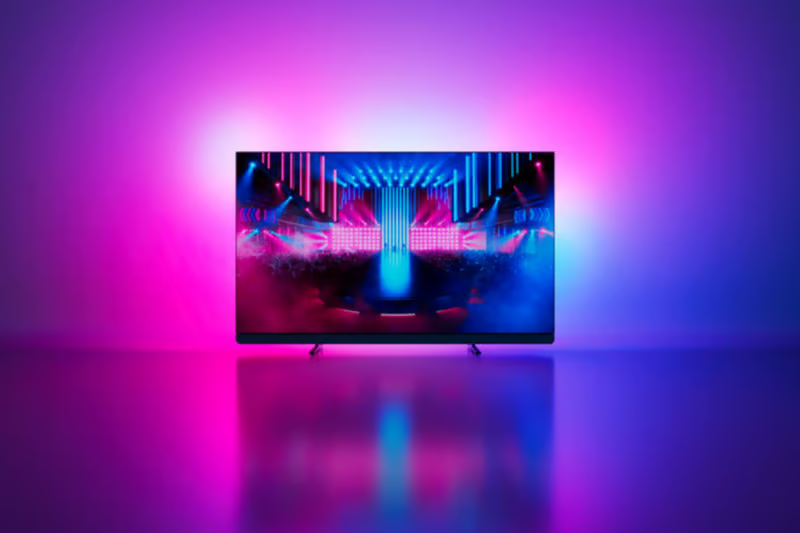
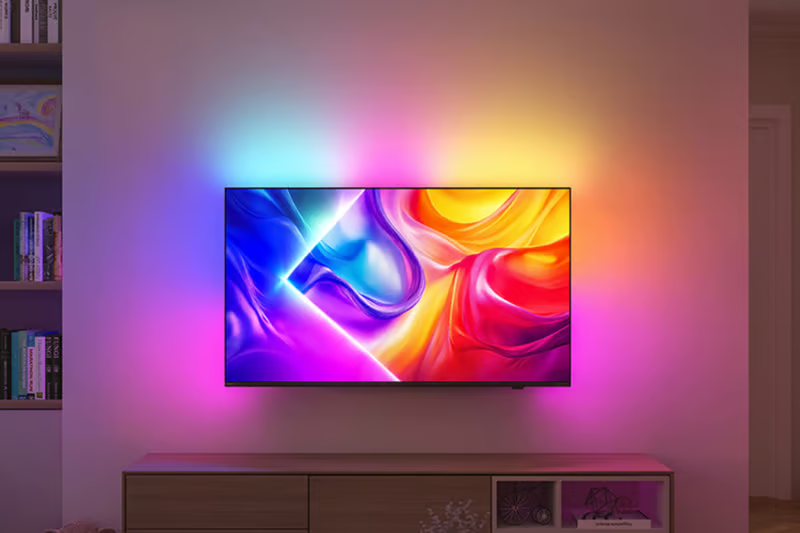
Yes. A 65-inch TV already has real presence, and Ambilight adds to that in a way that feels natural, making the screen seem larger without the setup feeling imposing in the room. It is especially effective in darker environments, when the light around the screen softens the look and makes longer viewing feel easier.

Bottom line
A 65-inch TV is a strong choice if you want a setup that feels bigger, more cinematic and more future-proof than a mid-size screen, without becoming difficult to live with. It usually works best if:
- you sit around 2 to 2.4 metres away
- you want films, sport or games to feel more immersive
- you have enough wall or furniture space for a TV around 145 cm wide
- you are ready for a TV that usually needs a sturdier stand or mount
If your room is tight, or you sit much closer than 2 metres, it may feel like more TV than you need. But in a typical living room, 65 inches often hits the sweet spot.
This article was created with the assistance of AI, along with detailed input, careful editing, and fact-checking by our team to ensure accuracy and quality.
Recommended products
- 65OLED801/12
- 164cm(65")AMBILIGHT TV
- 4K OLED. 120 Hz
- P5 AI perfect picture engine
- Dolby Vision and Dolby Atmos
- 65OLED911/12
- Ambilight TV, AmbiScape
- 4K OLED. Up to 165Hz
- Bowers & Wilkins sound
- P5 AI Intelligent Engine
- 65OLED761/12
- 164cm(65") Ambilight TV, AmbiScape
- 4K OLED. 120 Hz
- P5 AI Intelligent Engine
- IntelliSound


You might like

What is the best screen size for you?
Reading time: 8-14 min.

How to place your TV right in any room
Reading time: 12-14 min.

What makes a TV good for gaming?
Reading time: 6-8 min.

What is Titan OS?
Reading time: 4-6 min.

What is Ambilight TV? Why should you have one?
Reading time: 6-8 min.

What is Quantum Dot?
Reading time: 4-6 min.