75-inch TVs: who are they best for?
By Philips
14/08/2026
5-8 min. read

A 75-inch TV makes sense when you want the screen to feel like the main event, not just something on in the background. In the right room, it feels cinematic. In the wrong room, it can dominate the space very quickly.
At a glance
- How big is a 75-inch TV?
- How heavy is a 75-inch TV?
- Where does a 75-inch TV make sense?
- How far should you sit from a 75-inch TV?
- Is a 75-inch TV big enough?
- Is a 75-inch TV too big?
- Should you choose 65 or 75 inches?
- What about picture quality and gaming?
- Does Ambilight make a difference on a 75-inch TV?
- Bottom line
How big is a 75-inch TV?
A 75-inch TV measures the screen diagonally, not across the width.
In real terms, it is about:
- 191 cm diagonally
- 166 cm wide
- 93 cm high
That is excluding the bezel (frame) or stand. Depending on the model, the full width and height can end up slightly larger.
This is the point where a TV stops feeling like a simple piece of furniture and starts shaping the room around it. A 75-inch screen needs proper wall space, a wide enough cabinet if it is not mounted, and enough breathing room around it so the setup does not feel cramped.
How heavy is a 75-inch TV?
A 75-inch TV is not especially difficult to install, but it is not a one-person job. A typical 75-inch Philips TV weighs roughly between 21 and 25 kg.
In practice, that means two things. First, you will usually want two people for setup. Second, if you plan to wall mount it, you need to think beyond the bracket itself. The wall strength, the fixings and the mounting position all matter once you get to this size.
Where does a 75-inch TV make sense?
A 75-inch TV is usually a good fit for:
- Larger living rooms
- Open-plan spaces
- Home cinema or media rooms
- Anyone sitting around 2.3 to 2.8 metres from the screen
It can also work well in a standard living room if the layout is simple and the TV wall can carry the size comfortably. The key question is less “will it fit?” and more “will it feel right from where you actually watch?”

How far should you sit from a 75-inch TV?
A 75-inch TV often works best at around 2.3 to 2.8 metres.
If you like a more cinematic feel, sitting a little closer can still work, especially with 4K. If you mostly watch casual TV and do not want the screen to take over your field of view, sitting nearer the far end of that range will feel more natural.
This is why 75 inches tends to suit main living spaces and dedicated media rooms better than tighter spaces. At short distances, it can feel impressive. At the wrong distance, it can simply feel too much.
Is a 75-inch TV big enough?
For most homes, yes. In fact, for many people a 75-inch TV is already firmly in large-screen territory. It works especially well if you often watch with other people, giving everyone in the room a better view, and it also makes split-screen gaming easier to enjoy.
If you sit much beyond about 3.1 metres, 75 inches can still work, but this is where some people start looking at 85 inch models instead. If you sit closer than about 2.3 metres, 75 inches can still be enjoyable, but only if you genuinely want a more immersive setup.
Is a 75-inch TV too big?
Sometimes, yes. A 75-inch TV is no longer an outlier, but it still needs the right room. If the screen fills a narrow wall, forces the TV too high, or leaves no space around the edges, the result can feel clumsy rather than cinematic.
That is often the mistake with larger TVs. People focus on the diagonal size and forget the whole setup around it. A 75-inch TV can look perfectly balanced in one room and plainly oversized in another, even if both rooms are technically big enough to hold it.
Should you choose 65 or 75 inches?
This is usually the real decision. A 75-inch TV has about 33% more screen area than a 65 inch model, which is enough to look noticeably bigger in everyday use.
In practical terms:
- 65 inch: easier to place, easier to live with, still large enough for most living rooms
- 75 inch: more immersive, more cinematic, better if you have the space and sit a little further back
If your seating is around 2 to 2.3 metres, a 65-inch TV is often the safer choice. If you are closer to 2.3 to 2.8 metres and want the room to feel more theatre-like, 75 inches usually makes more sense.
What is the best TV size for you?
Choosing a new TV size? Read this article and find the best TV size for your room & viewing distance.

What about picture quality and gaming?
At 75 inches, picture quality matters more because the screen is large enough to expose weak source material more easily. This is a size where 4K makes clear sense, especially if you sit toward the closer end of the viewing range. It helps detail, textures and on-screen menus hold together properly.
For gaming, 75 inches can feel spectacular if the room layout supports it. Racing games, open-world titles and sport all benefit from the extra scale, and with a screen this size, you do not need to sit especially close to feel drawn in.
Does Ambilight make a difference on a 75-inch TV?
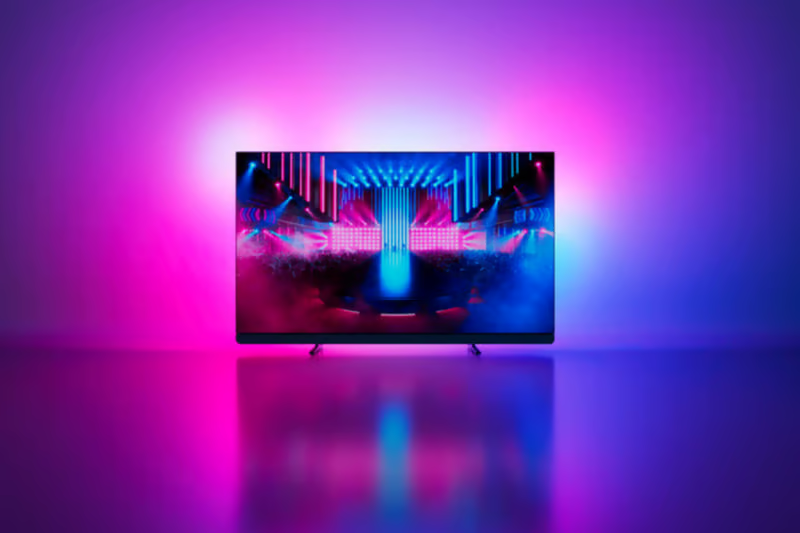
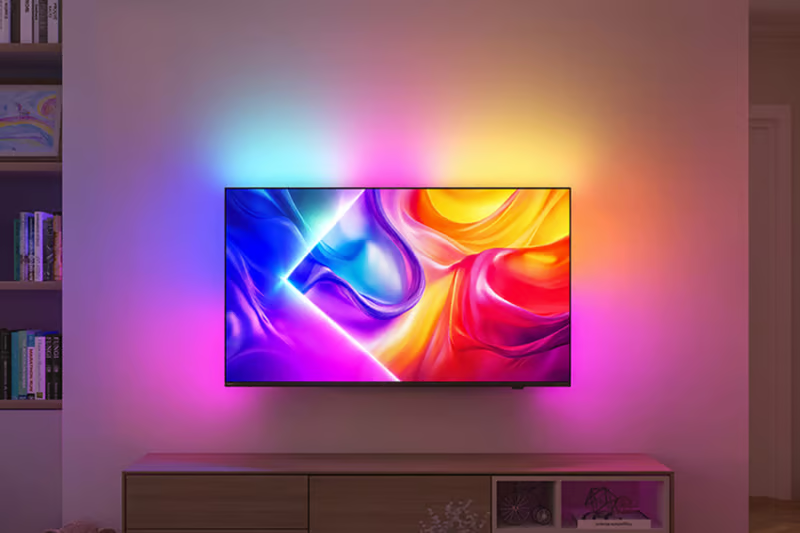
A 75-inch screen already has presence, and Ambilight builds on that. Instead of the picture ending abruptly at the frame, the light carries it into the wall behind, which can make the whole setup feel even larger and more immersive. It also helps in low light, where a bright screen on its own can feel harsher.

Bottom line
A 75-inch TV is a large, high-impact choice for rooms where the screen is meant to be part of the experience. It works best if:
- you sit around 2.3 to 2.8 metres away
- you have enough wall or cabinet space for a TV about 166 cm wide and 93 cm high
- you want films, sport and gaming to feel more immersive
- you are prepared for the extra weight and installation demands that come with a bigger screen
If your room is tighter, your wall space is limited, or you are still unsure about scale, 65 inches is often the safer option. But if the room can carry it, a 75-inch TV is often the point where home viewing starts to feel genuinely cinematic.
This article was created with the assistance of AI, along with detailed input, careful editing, and fact-checking by our team to ensure accuracy and quality.
Recommended products
- 75PQS9001/12
- Ambilight TV
- 4K QLED. Up to 144Hz
- P5 Picture Engine
- Dolby Vision and Dolby Atmos


You might like

What is the best screen size for you?
Reading time: 8-14 min.

How to place your TV right in any room
Reading time: 12-14 min.

What makes a TV good for gaming?
Reading time: 6-8 min.

What is Titan OS?
Reading time: 4-6 min.

What is Ambilight TV? Why should you have one?
Reading time: 6-8 min.

What is Quantum Dot?
Reading time: 4-6 min.