Can you brush your teeth too much?
By Philips
22/07/2026
5-7 min. read

Brushing your teeth is one of the simplest, most effective ways to support your oral health. But can you brush your teeth too much? It may come as a surprise, but the answer is yes. While regular brushing is essential for removing plaque and preventing decay, brushing your teeth too much or too aggressively can lead to long-term problems. This is referred to as overbrushing teeth, and it can undo many of the benefits you’re trying to achieve. It’s not just about brushing; it’s about brushing wisely.
This guide will cover questions like ‘can overbrushing damage teeth?’ and provide tips on how to fix overbrushed teeth so that you can effectively manage your oral hygiene.
At a glance
- Understanding the issue: What is overbrushing teeth?
- Can overbrushing damage teeth?
- What are the common signs of overbrushing teeth?
- How to fix overbrushed teeth and restore your smile
Understanding the issue: What is overbrushing teeth?
So, what is overbrushing teeth exactly? It refers to a combination of excessive frequency, pressure, and poor technique when cleaning your teeth. Many people mistakenly believe that brushing harder or more often is how you can brush your teeth properly, but this isn’t good news for your dental hygiene.
Can you overbrush your teeth just by brushing more than twice daily? Absolutely. Even with good technique, brushing too frequently is a leading contributor to overbrushing.
This behaviour often stems from good intentions, but over time, overbrushing teeth can:
- Irritate or damage the gums1
- Wear away the enamel on your teeth and gum tissue (also known as toothbrush abrasion)2
- Expose the sensitive tooth roots1
Even the type of toothbrush and toothpaste you use can contribute to overbrushing, making it crucial that you choose wisely for the health of your teeth and gums.
Can overbrushing damage teeth?
Let’s get straight to it: is overbrushing your teeth bad? Without a doubt. Over time, overbrushing teeth causes cumulative harm and wears away your enamel. Once your enamel is gone, it doesn’t come back.1
So, can overbrushing damage teeth permanently? Yes, and in many cases, it requires professional dental treatments such as fillings, root canals, and fluoride treatments to prevent further damage.1 Understanding what happens when you overbrush your teeth can prevent you from needing these costly and invasive treatments.
What are the common signs of overbrushing teeth?
Not sure if you're brushing correctly? Here are the most common signs of overbrushing teeth:
- Tooth sensitivity: Due to enamel wear, you may notice your teeth becoming more sensitive over time, particularly when you eat certain hot and cold foods, such as ice cream.3
- Gum recession: Brushing your teeth too much can push the gums back, exposing the roots of your teeth and leaving you susceptible to cavities and tooth loss.34
- Bleeding or sore gums: A common sign that you’re overbrushing, and often one of the earliest indications.3
- Yellow teeth. If you’re wondering ‘Does overbrushing cause yellow teeth?’, the answer is a resounding yes. As your enamel erodes, the naturally yellow dentin underneath begins to show. This means your teeth may appear darker or more yellow, even if you’re brushing regularly.5
It’s easy to overlook these overbrushing teeth symptoms, especially when your mouth feels clean. If you notice signs of overbrushing, though, it’s important to seek the help of a dentist and reconsider your dental hygiene routine, including the toothbrush you’re using.
How to fix overbrushed teeth and restore your smile
If you recognise any overbrushing teeth symptoms, don’t panic! It’s never too late to practice good oral hygiene. Here’s how to fix overbrushed teeth effectively:
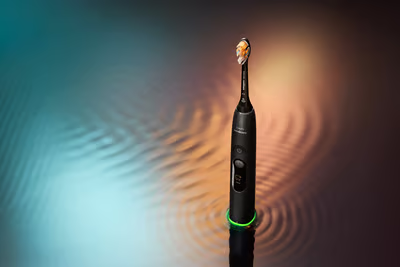
Monitor your pressure: Brushing too hard can contribute to enamel wear and gum irritation, so keeping an eye on pressure is key. A smart toothbrush such as the Philips Next-Generation DiamondClean 9900 Prestige can help, with built-in pressure feedback that lets you know when you’re applying too much force and supports a safer, more effective clean. You can also use post-brushing feedback for personalised tips and start your journey towards better brushing for happy, healthy gums.
Let the toothbrush adapt to you: To make gentler brushing feel effortless, the Philips Next-Generation DiamondClean 9900 Prestige features SenseIQ technology, which senses when you’re using too much pressure and automatically adapts the intensity. This helps you maintain a thorough clean while being kinder to your teeth and gums.
Floss your teeth: You don’t have to brush hard to remove food from your teeth. By flossing, you can dislodge any debris left behind for an effective clean that doesn’t put your dental hygiene at risk.4
Brush twice a day: Stick to brushing twice a day, once in the morning and once in the evening. To freshen your breath throughout the day, use a gentle, alcohol-free mouthwash.
It’s also important to work on your overall brushing technique. Both the Philips Next-Generation DiamondClean 9900 Prestige and the Philips Next-Generation DiamondClean 9000 offer smart coverage feedback, helping you reach all areas of your mouth evenly without focusing too much on any one spot.
Follow these tips for an effective clean that prevents damage6:
- Use a soft-bristled toothbrush, like any of the Philips Next-Generation DiamondClean toothbrushes. With Next-Generation Sonicare technology, they gently remove 20x more plaque*, meaning you don’t have to brush too hard for a good clean.
- Hold the brush at a 45-degree angle to clean the gum line without exerting too much force.
- Gently brush your teeth with small circular motions away from the gum line.
- Use short back-and-forth strokes, covering all the surfaces of your mouth, including the outer and inner surfaces.
- Spend around 30 seconds in each of the four sections of your mouth.
- Make sure that you spend time brushing hard-to-reach back teeth, and any crowns or fillings you may have.
- Brush for two minutes – no more, no less.
- Avoid rinsing straight after you brush your teeth, as this will wash away the fluoride in your toothpaste.
If you've been asking yourself ‘is overbrushing your teeth bad?’, or you suspect you're already facing some overbrushing teeth symptoms, now is the time to act. The earlier overbrushing can be detected, the more can be done to treat it. If you’re ever in doubt over the health of your teeth and gums, book an appointment with your dentist.
Knowing what happens when you overbrush your teeth puts you in a far better position to identify the early signs of overbrushing, and adjust your technique to protect your enamel and gums. For an effective dental hygiene routine that’s tailored to you, choose the Philips Next-Generation DiamondClean 9900 Prestige. It’s smart, interactive, and efficient for a next-level clean.
*vs manual toothbrush
Recommended products


You might like
A Guide to Philips electric toothbrushes
Reading time: 5-7 min.

Gentle brushing techniques
Reading time: 5-8 min.

How long should you brush your teeth for?
Reading time: 4-6 min.

Are electric toothbrushes better?
Reading time: 4-6 min.

Teeth and gums hurt: Causes and treatments
Reading time: 4-6 min.

How to brush sensitive teeth
Reading time: 4-6 min.


Overbrushing: too much of a good thing, Delta Dental Read more
Controlled Toothbrush Abrasion of Softened Human Enamel, Karger Read more
Symptoms of overbrushing teeth, Wilkinson Dental Read more
Gingival recession: its causes and types, and the importance of orthodontic treatment, NIH Read more
I brush my teeth regularly, why are they still yellow, Naenae Dental Read more
Teeth cleaning guide, NHS Inform Read more