How long should you brush your teeth for, and why timing matters
By Philips
13/05/2026
4-6 min. read

Brushing your teeth is one of the most basic daily hygiene habits, yet many people still wonder: how long should you brush your teeth for, and does the timing really matter? While dental professionals may offer different advice depending on your specific oral care needs, the consistently recommended brushing time is two minutes, twice a day.¹
Understanding the ideal duration of brushing teeth, how often should teeth be brushed each day, and how to maintain a consistent care routine helps you clean thoroughly and regularly without causing damage.
At a glance
- How many minutes should you brush your teeth for?
- Why should you brush your teeth for 2 minutes?
- How timing affects plaque removal and oral health
- How often should teeth be brushed each day?
- Can you brush your teeth for too long
- Tips to maintain a consistent 2-minute brushing teeth routine
- FAQs: common questions about recommended brushing time
How many minutes should you brush your teeth for?
The widely accepted dental standard is two minutes per brushing session, twice daily.¹
Research comparing brushing times shows that plaque removal increases significantly from 45 seconds to two minutes.² As a result, spending 2 minutes brushing your teeth has become the agreed standard for daily maintenance.¹
Why should you brush your teeth for 2 minutes?
Two minutes provides enough time to¹:
- Reach all tooth surfaces
- Clean along the gumline
- Disrupt plaque build-up
- Deliver fluoride evenly across enamel
Plaque is sticky and forms continuously. Brushing for under 60 seconds is likely to leave areas untouched, especially back molars and around the gumline.³ The 2-minute brushing teeth standard ensures the whole mouth is covered.
How timing affects plaque removal and oral health
Much like how properly you brush, timing is critical for plaque removal and overall teeth and gum health. Here’s how:
- Plaque removal efficiency: Plaque accumulates unevenly across the mouth. Using plaque-disclosing tablets can show areas of your teeth and gumline margins that are often missed during short and inadequate brushing sessions.⁴ By following the two-minute rule, you are more likely to properly clean each region of your mouth.
- Enamel protection: Fluoride toothpaste strengthens enamel by promoting remineralisation.⁵ Following the recommended brushing time ensures fluoride contact across all teeth. Short brushing sessions reduce the distribution of fluoride, weakening its protective effects.
- Gum health: Gingivitis begins when plaque remains near the gums.⁶ The recommended time to brush your teeth helps remove bacteria from this critical zone. Consistent two-minute brushing helps reduce inflammation and maintain healthy gums.⁶
How often should teeth be brushed each day?
Twice daily brushing, in the morning and before bed, is optimal for oral health.³
Night-time brushing is especially important. When you don’t, harmful bacteria sit on your teeth all night, slowly eating away at the enamel. In the long-term, this can lead to tooth decay, gum disease, and even loss of teeth.⁷ So, always remember to brush your teeth before you go to bed.
Some people benefit from additional brushing (for example, after meals). You should always wait 30 minutes after brushing to consume any food or drink, to not disrupt the fluoride.¹
Can you brush your teeth for too long
Yes, you can brush your teeth for too long, especially with excessive pressure and a stiff-bristle toothbrush. Some of the risks of overbrushing include⁸:
- Enamel wear
- Gum recession
- Tooth sensitivity
- Bleeding or soreness
Therefore, it’s best to stick with the recommended two-minute timeframe. You can learn more about overbrushing in our dedicated guide.
Tips to maintain a consistent 2-minute brushing teeth routine
A practical method for brushing is to split the mouth into four quadrants and spend 30 seconds per section³:
- Upper right teeth – 30 seconds
- Upper left teeth – 30 seconds
- Lower right teeth – 30 seconds
- Lower left teeth – 30 seconds
Within each quadrant, brush³:
- Outer surfaces
- Inner surfaces
- Chewing surfaces
This structure ensures complete coverage of your mouth without rushing.
Finding it difficult to know how long to brush your teeth, and when to stop? Here are some ways to stick to two minutes:
- Use a timer: Many sonic toothbrushes feature built-in timers that helps ensure you brush your teeth for the recommended brushing time. Alternatively, setting a 2-minute timer on your phone can be just as useful.
- Play a 2-minute song while brushing: This transforms a mundane daily chore into something more fun and engaging.
- Count quadrants (30 seconds each): Spend 30 seconds brushing each of the four sections of your mouth.
- Brush in front of a mirror: This forces you to focus on brushing and tracking your progress.
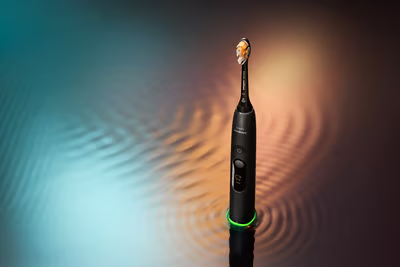
The Philips Sonicare Next-Generation DiamondClean 9900 Prestige is designed to support a consistent brushing routine with guidance tailored to the way you brush. Features such as smart coverage feedback, pressure sensing and SenseIQ adaptive intensity help you clean more effectively, while gently removing up to 20x more plaque* and supporting up to 15x healthier gums**.
FAQs: common questions about recommended brushing time
Is brushing longer than two minutes better?
Not necessarily. According to the NHS, two minutes is a sufficient amount of brushing time to effectively remove plaque.¹ Brushing for too long can increase enamel and gum wear, especially with strong pressure.⁸
How long should you brush teeth with braces?
People with fixed braces should generally brush their teeth for two minutes, twice a day, to clean brackets and wires thoroughly.⁹ This routine should also include flossing and cleaning with interdental brushes.
If you are ever unsure about how long to brush your teeth for, speak to your orthodontist. They can give you tailored oral health advice that suits your needs.
How long should I brush my teeth with an electric toothbrush?
The answer remains two minutes, twice daily, unless advised otherwise by a dentist.
Modern sonic toothbrushes like the Philips Sonicare Next-Generation DiamondClean 9900 Prestige can help support a more consistent oral care routine. When paired with the Philips Sonicare app, the toothbrush offers progress tracking and personalised brushing insights, making it easier to follow the recommended brushing time, stay engaged with your routine and achieve a thorough clean.
By dividing the mouth into sections, using gentle techniques, and relying on tools like timed electric toothbrushes, most people can easily achieve the ideal two-minute routine.
Consistency matters more than force or duration - thorough, gentle brushing within the recommended timeframe is the key to lifelong oral health.
For more brushing tips, check out our dedicated guide where we address your top teeth brushing questions.
*vs. manual toothbrush
** in Clean mode vs a manual toothbrush in 6 weeks
Recommended products
- HX9813/98
- Smart coverage feedback
- SenseIQ Adaptive Intensity
- 20 x more plaque removal*
- Up to 15 x healthier gums**
- Next-Gen Sonicare Technology
- HX9813/92
- Smart coverage feedback
- SenseIQ Adaptive Intensity
- 20 x more plaque removal*
- Up to 15 x healthier gums**
- Next-Gen Sonicare Technology
- HX9813/91
- Smart coverage feedback
- SenseIQ Adaptive Intensity
- 20 x more plaque removal*
- Up to 15 x healthier gums**
- Next-Gen Sonicare Technology


You might like
A Guide to Philips electric toothbrushes
Reading time: 5-7 min.

Gentle brushing techniques
Reading time: 5-8 min.

Are electric toothbrushes better?
Reading time: 4-6 min.

Teeth and gums hurt: Causes and treatments
Reading time: 4-6 min.

How to brush sensitive teeth
Reading time: 4-6 min.

What happens when you overbrush your teeth?
Reading time: 5-7 min.


