Toothbrush care: how often should you change your toothbrush?
By Philips
12/12/2025
10-12 min. read

Good oral hygiene requires not only thorough brushing and regular check-ups with your dentist, but also regular cleaning – and changing – of your toothbrush.
To help you protect your family’s oral health, this article will lay out the steps for how to clean an electric toothbrush or a manual one:
- Use hot water
- Air dry
- Store upright
In addition, we’ll answer important questions around the topic of toothbrush cleaning and storage: for example, how often should you replace your toothbrush and how to clean your toothbrush head. So read on to discover your guide to how to clean and when to change your toothbrush.
At a glance
- Why you should clean and change your toothbrush
- How to clean a toothbrush: your guide to manual toothbrush care
- How to clean an electric toothbrush
- How often should you replace your toothbrush?
- Top 4 indicators you need to change toothbrush
- Tips to store your clean electric toothbrush or manual brush hygienically
Why you should clean and change your toothbrush
Before we show you how to clean a toothbrush head, you should understand why it’s important. Here’s what happens if you don’t clean or change your toothbrush:
- Germs and bacteria like to settle on the bristles.
- These microbes can easily spread in the humid climate of your bathroom.
- If you don't clean your toothbrush correctly, you will be putting germs and bacteria back into your mouth.
- If your toothbrush is stored next to someone else’s toothbrush, it could spread microbes to your toothbrush.
- Bacteria and microbes in your mouth can lead to a build-up of plaque and tartar, increasing the risk of infections and gum diseases such as gingivitis.¹
How to clean a toothbrush: your guide to manual toothbrush care
Now that you understand the importance of appropriate toothbrush care, here’s our quick guide to how to clean a toothbrush after you’ve brushed your teeth:
- Rinse using clear, running water. Running your manual toothbrush under clean, hot water after every use will help to remove toothpaste residue and bacteria.
- Shake the brush. Gently shake excess water off your toothbrush after rinsing. If your brush is left too wet, bacteria may settle into the bristles.
- Allow it to air dry. To help protect the toothbrush from germs settling, leave it to dry in a glass or toothbrush holder with the head up.
While these steps will give you a quick and easy basic clean, you should ideally also sterilise your toothbrush head.² Rinsing your brush head and then soaking the bristles in an antibacterial mouthwash for 20 minutes is an effective way of eliminating bacteria.³ Once you have sterilised the brush, follow the above three steps to rinse it clean and dry it.
How to clean an electric toothbrush
Cleaning your electric toothbrush is simple. For the head, you can follow the same steps as when you clean a manual toothbrush. So, here’s how to clean an electric toothbrush head:
- Rinse the bristles and sterilise them by soaking them in antibacterial mouthwash for 20 minutes.
- Rinse the brush head under running water.
- Shake off excess water.
- Leave the head to air dry.
However, you should clean not only the brush head but also the handle of your electric toothbrush regularly. This will help to prevent calcifications and other stubborn stains.
- Remove the brush head. This can be cleaned and sterilised using the steps above.
- Wipe the entire handle clean. This can be done gently and briefly with a damp cloth. Make sure that all toothpaste residue is removed.
- Dry the toothbrush. Use a clean, dry cloth to dry the handpiece in order to prevent damage and avoid the growth of mould.
- Clean the charging station. Unplug the charging station and use a clean, damp cloth to wipe the surface clean. Don’t forget to dry it before plugging it back to charge; you can use a dry cloth for this.
Did you know? Knowing how to clean your toothbrush is obviously important for hygiene reasons, but it can also save you money on toothbrushes. Calcifications and other dirt can compromise the functionality of your electric toothbrush over time, regardless of whether you have a rotating or sonic toothbrush.
How often should you replace your toothbrush?
How often should you change your toothbrush? The NHS recommends that you change your toothbrush every three months, whether you’re buying a new manual toothbrush or switching to a new electric toothbrush head.⁴
This figure is a helpful guideline. In some cases, though, you may need to replace a toothbrush sooner if you notice signs that your toothbrush has reached the end of its life.
Now you know how often to change your toothbrush under normal circumstances, let’s look at what signs might suggest that your toothbrush needs to be replaced.
Top 4 indicators you need to change toothbrush
Following the correct method for how to clean your toothbrush head is only half the story. Eventually the bristles become less effective and it’s time to change your toothbrush – but how can you tell when it’s time?
The three-month guideline for how often to change a toothbrush head is useful, but you may sometimes find that your toothbrush becomes worn out before the three months are up. There are a number of indicators that you should change your toothbrush:
- The bristles start to look ragged.
- Your toothbrush starts to smell, even after cleaning.
- Your teeth don’t look or feel clean after using your toothbrush.
- You’ve forgotten the last time you changed it.
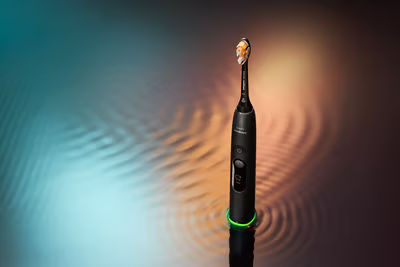
Tip: Some modern electric brushes have a brush head change indicator light which will show when it is time to change the brush. The Philips Sonicare Next-Generation DiamondClean 9000, for example, keeps track of how heavily you’ve been using the brush and lets you know it’s time for a replacement with a light on the handle, taking the guesswork out of how often to change a toothbrush head.
Tips to store your clean electric toothbrush or manual brush hygienically
Now that you know how often to change toothbrush and how to clean it, you’re probably wondering how to store it hygienically in between uses and cleans. Here are some simple tips to help you properly store your fresh manual brush or how to clean your electric toothbrush:
- Always store your toothbrush upright. This will allow it to dry in the fresh air.
- When traveling, use a toothbrush box. When you’re putting your brush or brush head into your bag, use a case to protect it from dirt and bacteria.
- Don’t share your toothbrush. Using someone else’s brush – or allowing them to borrow yours – can encourage the transmission of diseases.⁴
As you can see, it’s a lot simpler than most people realise to clean an electric toothbrush or a manual one! With this guide, we’ve also set you up with everything you need to know about how often to change a toothbrush head and how to store it hygienically.
Now you can be sure to have a clean brush and a clean mouth. After all, only a clean toothbrush can make your teeth clean and your smile healthy.
Recommended products
- HX9214/85
- Smart coverage feedback
- 20 x more plaque removal*
- Up to 15 x healthier gums**
- Next-Gen Sonicare Technology
- Smart pressure feedback

You might like
A Guide to Philips electric toothbrushes
Reading time: 5-7 min.

Gentle brushing techniques
Reading time: 5-8 min.

How long should you brush your teeth for?
Reading time: 4-6 min.

Are electric toothbrushes better?
Reading time: 4-6 min.

Teeth and gums hurt: Causes and treatments
Reading time: 4-6 min.

How to brush sensitive teeth
Reading time: 4-6 min.


