Teeth and gums hurt: Common causes and what you can do
By Philips
13/05/2026
4-6 min. read

When your teeth and gums hurt, it’s worth paying attention. From sudden sensitivity to sore gums around your teeth, these can be early warning signs of serious issues, including gingivitis (gum disease). By getting to grips with what your symptoms mean, you’ll be in a better position to seek help proactively and take control of your oral hygiene.
In this guide to discomfort in teeth and gums, we’ll explore:
At a glance
- Why do my teeth and gums hurt?
- When to take tooth and gum sensitivity seriously
- How to treat discomfort in teeth and gums
- FAQs: Discomfort in teeth and gums
Why do my teeth and gums hurt?
Tooth and gum sensitivity can be caused by a wide range of issues, most of which link back to poor oral health or brushing technique. Let’s take a closer look at what causes sensitive teeth and gums:
- Plaque build-up: 26% of British adults only brush their teeth once a day.1 This can lead to a build-up of plaque, a film of bacteria, saliva, and food that covers the teeth, resulting in a wide range of dental issues1
- Gum inflammation: When you don’t clean away plaque efficiently, it increases inflammation and leads to redness, swelling, and pain in between the gum and tooth.2 If left untreated, gum inflammation can develop into more serious gum conditions, including gingivitis.
- Aggressive brushing: Brushing too hard or for too long can wear away your tooth enamel, leading to tooth sensitivity.2 Overbrushing is also a leading cause of receding gums, which expose the sensitive roots of your teeth, and can result in bleeding gums.2
- Tooth decay: Bacteria found in plaque can wear away your teeth, leading to tooth decay and cavities.2 These can be incredibly painful, increasing sensitivity in the teeth and gums, as well as causing toothaches.
When to take tooth and gum sensitivity seriously
With around 30% of people experiencing tooth sensitivity, this is a fairly common problem, but not one that should be ignored.3
If you struggle with sensitivity when you eat hot or cold foods, for instance, it could be a sign that your enamel is wearing away. Tooth sensitivity at the gumline, on the other hand, is a sign of receding gums, while if the gum between your teeth hurts, you may have gingivitis.3
Fleeting sensitivity isn’t always a cause for concern. If the pain lingers or is frequent, however, it may be best to seek professional dental advice.
How to treat discomfort in teeth and gums
Whether you’re struggling with sore gums between two teeth or ongoing sensitivity, there are steps you can take to relieve discomfort at home. Note that these tips should be accompanied by professional dental care, especially if you’re experiencing persistent pain.
- Floss daily: Flossing before you brush helps remove trapped food particles and bacteria from between the teeth, where irritation and inflammation often start.4 This can be particularly helpful if you’re experiencing soreness in one specific area of the gums.
- Brush gently twice a day: Brushing your teeth twice a day for around two minutes helps remove plaque and protect gum health.4 However, it’s important to avoid overbrushing, as too much pressure can irritate sensitive gums.
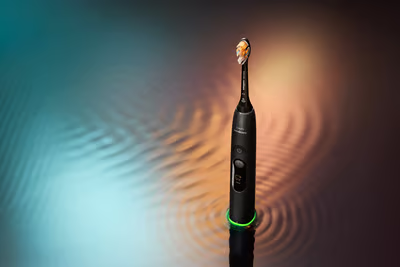
If you’re reviewing your brushing routine, switching to a sonic toothbrush can be a helpful way to clean more thoroughly without brushing harder. The Philips Next-Generation DiamondClean 9900 Prestige is designed to support a gentler technique while still removing up to 20 times more plaque* and helping gums become up to 15 times healthier.**
Its SenseIQ technology also helps take some of the guesswork out of brushing: if you apply too much pressure, the toothbrush automatically adjusts the intensity to help protect your teeth and gums. A three-level light ring gives you real-time pressure feedback as you brush, while the 12-zone mouth map shows where you may need to improve your coverage afterwards.
- Use a fluoride toothpaste: A fluoride toothpaste helps strengthen enamel and protect sensitive areas of the teeth.4 Regular use can reduce discomfort by making teeth more resistant to acid wear and plaque buildup.
- Rinse with an alcohol-free mouthwash: To address sore, irritated gums around a tooth, follow up with an alcohol-free mouthwash containing chlorhexidine digluconate. This ingredient has been shown to help reduce gingivitis and can be especially useful for sore, swollen gums around a tooth.3
FAQs: Discomfort in teeth and gums
What causes sensitive teeth and gums?
Sensitive teeth and gums are often caused by worn tooth enamel and receding gums, which expose the more sensitive inner layers of the tooth.2 These issues are more common when you brush too hard or not often enough, making good dental hygiene a must.
How can I prevent sore gums around teeth?
If the area of gum between your teeth hurts, try rinsing with a chlorhexidine digluconate mouthwash. This acts as a powerful antiseptic to kill bacteria that might be responsible for your sore gums.5 You can also try a salt rinse for a simple, at-home solution to reduce bacteria.
How can I stop tooth and gum sensitivity?
If your teeth and gums hurt, your best option is to book a dental appointment. In the meantime, you can help reduce discomfort at home by using toothpaste designed for sensitive teeth and brushing gently. If you use the Philips Next-Generation DiamondClean 9900 Prestige, choose from the 8 brushing modes and 3 intensity levels to find a setting that feels comfortable, and use the built-in pressure sensor to avoid brushing too hard.
From sensitivity to pain in between your gum and tooth, dental issues are never fun to deal with. These early warning signs, though, are often your mouth’s way of asking for a little extra care, giving you the push to take action before small issues turn into bigger problems. Take discomfort in teeth and gums seriously and feel confident that you’re taking control of your oral health for the long term.
*vs. manual toothbrush
**in Clean mode vs a manual toothbrush in 6 weeks
Recommended products
- HX9813/98
- Smart coverage feedback
- SenseIQ Adaptive Intensity
- 20 x more plaque removal*
- Up to 15 x healthier gums**
- Next-Gen Sonicare Technology

You might like
A Guide to Philips electric toothbrushes
Reading time: 5-7 min.

Gentle brushing techniques
Reading time: 5-8 min.

How long should you brush your teeth for?
Reading time: 4-6 min.

Are electric toothbrushes better?
Reading time: 4-6 min.

How to brush sensitive teeth
Reading time: 4-6 min.

What happens when you overbrush your teeth?
Reading time: 5-7 min.


Report Highlights Concerns Into Britain’s Brushing Habits, Oral Health Foundation Read more
The Impact of Toothbrushing on Oral Health, Gingival Recession, and Tooth Wear—A Narrative Review, NIH Read more
Epidemiology of Dentin Hypersensitivity, NIH Read more
How to Keep Your Teeth Clean, NHS Read more
Chlorhexidine, NHS Read more